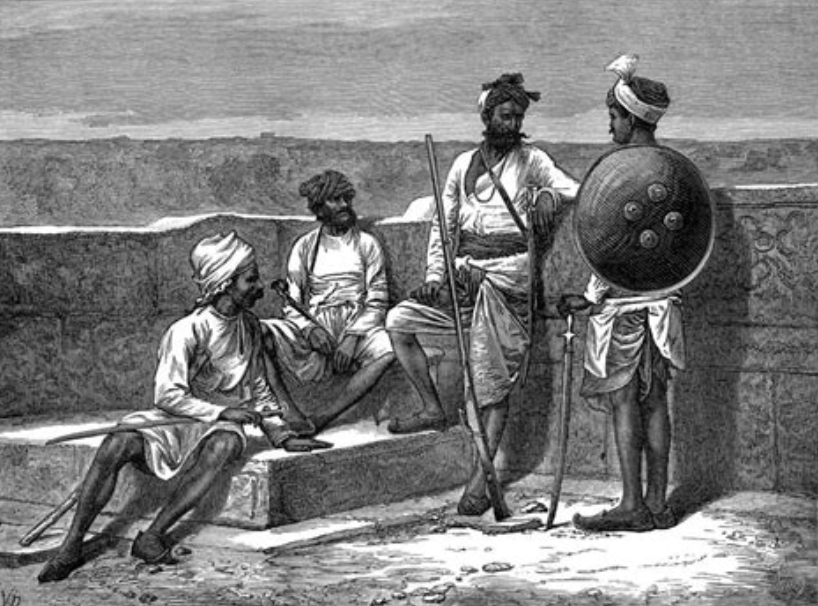
-> Sanskrit: काश्त्रिय kṣatriya (ruling class)
-> Old Persian khshathrapavan, which means "protector of the province" or "governor"
-> Greek σατράπης (satrápēs)
-> Latin satrapa.
These terms reflect the administrative and protective roles that were critical in their respective societies, highlighting how different cultures developed similar systems of governance.
Just as kshatriyas held authority over their territories, satraps acted as regional governors who reported to higher authority figures, such as emperors.
Books pertaining to ksatriya training in the Vedas
The Vedic texts primarily focus on spiritual knowledge, rituals, and social duties rather than providing specific training manuals. However, for Kṣatriya training, which encompasses martial skills, governance, and duty, the following texts are relevant:
Ṛgveda
Although it is primarily a collection of hymns, some hymns praise warriors and their duties.
- The oldest of the four Vedas, mostly composed of hymns.
- Contains hymns that praise the valor and strength of warriors, depicting the ideals of Kṣatriya bravery and heroism.
- For example, some hymns in the 7th Mandala, addressed to Indra, the warrior god, celebrate martial prowess and the protection of the people.
The Ṛgveda is the oldest of the four Vedas, believed to have been composed around 1500-1000 BCE. It consists of ten books, or Mandalas, containing a total of 1,028 hymns. These hymns were composed in Vedic Sanskrit and are primarily dedicated to various deities, reflecting the religious, cultural, and social aspects of the early Vedic society.
While the Ṛgveda is predominantly a collection of hymns intended for religious rituals and praises to the gods, it also provides insights into the roles and ideals of different classes within Vedic society, including the Kṣatriyas, or warrior class. Specific hymns celebrate the valor, strength, and duties of warriors. These hymns often praise deities like Indra, who personifies warrior virtues such as bravery, strength, and the protection of the people.
For example:
- Hymns in the 7th Mandala addressed to Indra emphasize his role as a mighty warrior who conquers enemies and bestows victory on his devotees, which serves as an ideal for Kṣatriyas to emulate.
- Other hymns praise the achievements of historical or semi-legendary warriors, reinforcing the values of courage and martial excellence.
These hymns would have been recited during rituals to invoke the favor of the gods for success in battle, to celebrate victories, and to inspire warriors with the ethical and spiritual dimensions of their duties. Through these verses, the Ṛgveda provides a foundational cultural context for the training and ethos of Kṣatriyas in ancient Vedic society.
Yajurveda
- Consists of ritual formulas and practices primarily for sacrifices.
- Contains guidance on conducting royal ceremonies, including coronations (Rajasuya) and consecration rituals, which are crucial for a Kṣatriya as part of their duties in governance and military leadership.
The Yajurveda is one of the four Vedas and is divided into two main parts: the “White” (Śukla) Yajurveda and the “Black” (Krishna) Yajurveda. Unlike the Ṛgveda, which is primarily a collection of hymns, the Yajurveda consists mainly of prose mantras and instructions for performing rituals and sacrifices, making it particularly important for priests and those conducting Vedic ceremonies. However, it contains significant material relevant to the training and duties of Kṣatriyas as well.
The Yajurveda outlines various rituals that are essential for the legitimacy and success of Kṣatriya rulers. Two prominent rituals that pertain to Kṣatriya training and duties include:
- Rajasuya (Royal Consecration Ceremony): This elaborate Vedic rite is performed to consecrate a king and is a key aspect of Kṣatriya dharma. The Rajasuya ceremony involves a series of complex rituals that symbolize the king’s divine right to rule, his duties to his subjects, and his readiness to protect and lead his kingdom. The ceremony also reinforces the social and cosmic order, emphasizing the Kṣatriya’s responsibility in maintaining Dharma (righteous order).
- Ashvamedha (Horse Sacrifice): Another crucial Vedic ritual associated with Kṣatriya rulers, the Ashvamedha is performed by a king seeking to assert his sovereignty and expand his dominion. During this ritual, a horse is symbolically set free to wander for a year, accompanied by the king’s warriors. The regions the horse traverses are either conquered or brought under the king’s suzerainty, reaffirming the Kṣatriya’s warrior prowess and territorial ambition.
In addition to these ceremonies, the Yajurveda contains various other ritualistic instructions and mantras for daily rites and sacrifices that a Kṣatriya would participate in or oversee, reflecting their role in upholding Dharma through both governance and martial activities. The hymns and mantras recited during these rituals often invoke deities like Indra, Agni, and Varuna, seeking their blessings for victory, prosperity, and protection.
Thus, the Yajurveda serves as a key text for understanding the sacrificial duties, ceremonial practices, and the ethical framework within which Kṣatriyas operated, providing both practical instructions for rituals and the spiritual underpinnings of their societal role.
Atharvaveda
- Includes hymns and incantations for both everyday and special purposes, some of which pertain to royal power and protection.
- Provides prayers and rituals for kings to ensure victory in battle and protection against enemies, thus covering aspects of Kṣatriya duties.
The Atharvaveda, one of the four Vedas, contains a mix of hymns, spells, and incantations, which were used for various practical purposes. Regarding Kṣatriya training and duties, it offers the following relevant aspects:
Atharvaveda and Kṣatriya Duties:
-
Royal Power and Sovereignty:
- Several hymns are dedicated to the consecration and empowerment of kings. These texts emphasize the divine right and responsibilities of a king to rule justly and protect his subjects.
- They include rituals and prayers that are believed to grant the king divine favor, strength, and legitimacy. An example is the hymn for the coronation of kings, which highlights the divine endorsement of their rule.
-
Protection and Victory:
- Many hymns focus on ensuring the king’s victory in battles. These spells and rituals are meant to invoke the protection of the gods, ensuring that the king and his army remain invincible against enemies.
- Specific verses, known as abhichāra (magical spells), are used to protect against adversaries, ward off evil, and secure blessings for war and governance.
-
Martial Skills and Valor:
- The Atharvaveda includes verses that instill confidence and courage in warriors, reinforcing their duty to protect and fight bravely for their kingdom.
- It includes incantations to enhance physical strength, courage, and the strategic acumen needed for warriors to succeed on the battlefield.
Examples:
- Hymn for Royal Consecration (Book 4, Hymn 22): This hymn is used during the anointment of a king, emphasizing purification, divine approval, and attributes such as strength and righteousness, necessary for ruling effectively.
- Protection Spells (Book 5, Hymn 30): A hymn that calls upon divine forces to safeguard the king from curses, evil spells, and harm, ensuring his well-being and capacity to govern.
- Victory Prayers (Book 6, Hymn 75): Prayers intended to invoke divine support for triumph in conflicts, ensuring the king’s dominance and the kingdom’s security.
These elements collectively highlight the /Atharvaveda/’s role in underpinning the religious and practical aspects of Kṣatriya duties, blending spiritual empowerment with the practical necessities of governance and war.
Dharmashastras (e.g., Manusmṛti)
- While not Vedas, these texts are important for understanding the duties and conduct of different varnas.
- Manusmṛti lays out the roles and expectations of a Kṣatriya, including protection of subjects, upholding justice, and skill in weaponry.
The Dharmashastras, particularly the Manusmṛti, are crucial for understanding the societal roles and duties of the various varnas (castes) within Vedic society, including the Kṣatriyas. Here’s an expanded explanation of their relevance:
Manusmṛti and Kṣatriya Duties
-
Protection of Subjects (Praja Raksha):
- The Manusmṛti emphasizes that one of the foremost duties of a Kṣatriya king is the protection of his subjects. The king is seen as the guardian of his people, responsible for ensuring their safety from internal and external threats.
- Protection extends beyond physical safety to include upholding Dharma (righteousness) within the kingdom, thereby ensuring a just and fair society.
-
Upholding Justice (Dharma):
- A significant portion of the Manusmṛti is dedicated to laws and legal codes that a Kṣatriya is expected to enforce. It elaborates on the principles of justice that should guide the king in governance and judicial matters.
- The Kṣatriya’s role as a judge is underscored, with the king being described as the upholder of law and order. This involves dispensing justice, resolving disputes, and administering punishment to maintain societal harmony.
-
Skill in Weaponry and Warfare:
- The Manusmṛti outlines the importance of martial skills for a Kṣatriya. Proficiency in the use of weapons and strategic acumen in warfare are considered essential attributes.
- The text encourages rigorous training and discipline in various martial arts, archery, and tactics to ensure readiness in defending the kingdom against enemies.
-
Duties in Governance:
- The Manusmṛti provides a framework for good governance, detailing administrative duties a Kṣatriya king must undertake. This includes maintaining a well-organized army, securing economic stability, and ensuring the prosperity of the kingdom.
- It advises kings on ethical governance, emphasizing values such as integrity, fairness, and accountability in administration.
-
Religious and Ceremonial Duties:
- The Manusmṛti also highlights the religious obligations of a Kṣatriya, including participating in and overseeing various Vedic rituals and sacrifices.
- The king’s role in performing rites like the Rajasuya and Ashvamedha is emphasized, as these ceremonies are integral to asserting royal authority and divine sanction.
Examples from Manusmṛti
- Chapter 7, Verses 2-3: “The king should always be eager to secure, by every means in his power, all that tends to benefit the people, and avoid what tends to their harm. He should afford constant protection to non-Brahmins, engage in the conquest of foes, yearn for glory, and ever strive after money, religious merit, and sensual pleasures.”
- Chapter 7, Verse 88: “Having duly studied the sciences of material arts and the proper management of people, he should, after properly uniting himself with the different military corps, resolutely attack his foes.”
- Chapter 8, Verses 1-2: “A king desirous of investigating different cases (law-suits) should enter his court of justice, preserving in due order the classes of litigants.”
Through these directives, the Manusmṛti provides a comprehensive guide for Kṣatriya training and conduct, blending ethical, martial, administrative, and religious responsibilities. These texts serve as a moral and practical compass, aiming to shape Kṣatriyas into ideal rulers and protectors of the land.
Mahābhārata
- An epic that, while primarily narrative, is didactic in nature.
- Contains numerous sections (e.g., Bhagavad Gītā) that discuss the dharma (duty) of a Kṣatriya, including righteousness in war, valor, and duties towards subjects and kin.
The Mahābhārata is one of the two major Sanskrit epics of ancient India, the other being the Rāmāyaṇa. It is not only a grand narrative of the Kurukshetra war and the fates of the Kaurava and Pandava princes but also a didactic text that addresses a wide range of philosophical and ethical issues, including the duties and ideals of Kṣatriyas.
Here’s an expanded explanation of its relevance:
Mahābhārata and Kṣatriya Duties
-
Philosophical and Ethical Framework:
- The Mahābhārata is rich in discourses that deal with the ethical dilemmas and duties of Kṣatriyas. The text explores complex themes such as justice, righteousness (dharma), and the moral duties of a warrior.
- Stories and dialogues often highlight the principles a Kṣatriya should uphold, such as loyalty, bravery, and righteousness, providing insights into the ethical and moral framework that guides Kṣatriya conduct.
-
Bhagavad Gītā:
- Within the Mahābhārata, the Bhagavad Gītā is a 700-verse discourse between Prince Arjuna and Lord Krishna on the battlefield of Kurukshetra. It is a key text addressing the philosophical and ethical dimensions of Kṣatriya duty.
- Lord Krishna instructs Arjuna on his Kṣatriya duty (svadharma) to fight for justice, emphasizing that adherence to dharma (righteous path) is paramount, and that performing one’s duty selflessly, without attachment to the results, is the highest form of action.
- Krishna’s teachings cover notions of duty, righteousness, and devotion, reinforcing the ideals that Kṣatriyas must strive towards.
-
Narrative Examples:
- The Mahābhārata is replete with examples of Kṣatriyas who embody the virtues expected of their class. Characters like Yudhishthira, Bhishma, and Karna illustrate different aspects of Kṣatriya dharma.
- Yudhishthira, for instance, is celebrated for his dedication to truth and justice, even when faced with severe personal and political challenges.
- Bhishma, the grand patriarch, represents loyalty, sacrifice, and adherence to duty, having taken a vow of celibacy and lifelong service to the throne for the stability of the kingdom.
- Karna is a complex figure who, despite adverse circumstances and personal struggles, exemplifies valor, generosity, and loyalty.
-
Royal Duties and Governance:
- The epic delves into the responsibilities of Kṣatriyas in governance and leadership. It offers advice on ruling justly, the importance of protecting subjects, and the ethical use of power.
- Various conversations and instructions, such as those given by Bhishma in the Shanti Parva (Book of Peace) and Anushasana Parva (Book of Instructions), provide detailed guidelines for kings on righteous governance, economic policies, and the welfare of the state and its people.
-
Martial Skills and Warfare:
- The Mahābhārata portrays numerous battles and duels, showcasing the martial skills and strategic acumen required of Kṣatriyas. It emphasizes the importance of training in archery, swordsmanship, and other martial arts.
- The descriptions of the Kurukshetra war provide insights into the tactics, codes of conduct in warfare (such as the respect for the rules of war and valor), and the psychological and physical demands placed on warriors.
Key Examples
- /Arjuna’s Dilemma and Krishna’s Counsel (Bhagavad Gītā)*: Arjuna is overcome with moral dilemma and despondency before the battle, questioning the righteousness of fighting his kin. Krishna’s counsel in the Bhagavad Gītā becomes a cornerstone for understanding Kṣatriya dharma, exhorting Arjuna to rise and fulfill his duty with righteousness.
- Yudhishthira’s Rule and the Rajasuya Sacrifice: Yudhishthira’s performance of the Rajasuya sacrifice and his subsequent reign depict the ideal of a just and righteous king, highlighting the responsibilities of protection, justice, and welfare of the subjects.
- /Bhishma’s Teachings (Shanti Parva)*: On his deathbed, Bhishma instructs Yudhishthira on the complexities of Dharma, providing a detailed treatise on kingly duties, governance, and the subtleties of righteousness, which serve as a guide to ethical leadership.
Through these narratives and teachings, the Mahābhārata serves as a comprehensive guide to the values, duties, and ideals of the Kṣatriya class, blending practical guidance with deep philosophical insights.
Rāmāyaṇa
- Another epic focused on the life of Rama, an ideal Kṣatriya king.
- Provides examples of Kṣatriya dharma through the narratives, focusing on ideals of leadership, duty, and martial prowess.
The Rāmāyaṇa, attributed to Sage Valmiki, is an ancient Indian epic that narrates the life and adventures of Rama, a prince of Ayodhya who is considered an exemplar of Kṣatriya virtues. The text is not only a story but also a rich source of moral and ethical teachings, particularly concerning the duties and ideals of Kṣatriyas.
Rāmāyaṇa and Kṣatriya Duties
-
Ideal Kingship and Leadership (Rāma-Rajya):
- Rama is portrayed as the ideal king, demonstrating virtues such as justice, compassion, and integrity. His reign, often referred to as Rāma-Rajya, represents a period of peace, prosperity, and righteousness. This concept serves as a benchmark for ideal governance.
- The epic shows how Rama adheres to his royal duties and responsibilities, even when faced with personal hardships, emphasizing the importance of sacrifice and duty over personal gain.
-
Adherence to Dharma:
- Rama’s life exemplifies the adherence to dharma (righteous duty) under all circumstances. Despite the personal cost, such as his exile to the forest for 14 years, Rama upholds his father’s word and respects the law of the land, showcasing the Kṣatriya commitment to duty and righteousness.
- Throughout his journey, Rama makes decisions that reflect his dedication to dharma, even when these decisions lead to personal suffering or conflict.
-
Martial Skills and Valor:
- Rama is often depicted as a warrior par excellence, skilled in archery and other martial arts. His battles against powerful enemies, particularly the demon king Ravana, highlight his prowess and strategic acumen.
- The epic underscores the importance of physical strength, courage, and military leadership for Kṣatriyas. Rama’s martial skills are instrumental in protecting the kingdom and restoring dharma.
-
Role of Protecting and Serving Subjects (Praja Raksha):
- The Rāmāyaṇa illustrates a Kṣatriya’s duty to protect the people and uphold societal order. Rama’s endeavors to rescue his wife Sita from Ravana are driven by his responsibility as a husband and a protector of dharma.
- Even in exile, Rama engages in acts that safeguard the welfare of sages and forests dwellers, highlighting the Kṣatriya’s broader role as a protector beyond the kingdom’s borders.
-
Ethical Decision-Making and Sacrifice:
- The epic is full of instances where Rama makes difficult ethical choices, often placing the welfare of others above his own desires. His decisions reflect the sacrifices inherent in the Kṣatriya’s duty to serve and protect.
- His voluntary acceptance of exile to honor his father’s promise, and his later decision to send Sita away for the greater good of his kingdom, illustrate the profound sacrifices expected of Kṣatriya leaders.
Key Examples
-
Rama’s Exile:
- Rama adheres to the command of his stepmother Kaikeyi and the promise made by his father, King Dasharatha, despite it meaning leaving the kingdom and the throne he was poised to inherit. This act demonstrates the Kṣatriya virtues of honoring promises, obedience to one’s elders, and prioritizing duty over personal desire.
-
Battle with Ravana:
- Rama’s confrontation with Ravana showcases his martial abilities, strategic acumen, and determination to uphold dharma by vanquishing evil. The battle is not just a physical confrontation but a representation of the eternal struggle between righteousness and unrighteousness, with Rama embodying the ideal warrior upholding divine justice.
-
Establishment of Rāma-Rajya:
- Upon his return to Ayodhya and ascension to the throne, Rama establishes a kingdom that becomes synonymous with ideal governance. His reign is characterized by justice, prosperity, and overall welfare, reflecting the ultimate Kṣatriya responsibility of ensuring the well-being of the subjects.
-
Decision about Sita:
- Facing scrutiny from his subjects regarding Sita’s purity after her abduction by Ravana, Rama makes the agonizing decision to send her away, demonstrating his prioritization of the kingdom’s harmony and reputation over his personal happiness. This act underscores the immense sacrifices leaders are expected to make for the greater good.
By portraying Rama as an ideal Kṣatriya, the Rāmāyaṇa serves as a moral and ethical guide for kings and warriors, emphasizing values such as duty, righteousness, sacrifice, and valor, which are integral to Kṣatriya life and governance. The epic thus continues to be a cornerstone for understanding the ideal virtues and responsibilities of Kṣatriyas in the context of ancient Indian culture and beyond.
Arthashastra by Kautilya/Chanakya)
- Though composed later, it is a crucial text for understanding the practical aspects of statecraft, military strategy, and governance relevant to Kṣatriyas.
The Arthashastra is an ancient Indian treatise on statecraft, economic policy, and military strategy, attributed to Kautilya (also known as Chanakya or Vishnugupta). Written around the 4th century BCE, during the Mauryan Empire, it provides a comprehensive guide to governance and administration. Though it was composed after the Vedic period, its relevance to Kṣatriya training and duties is immense due to its detailed coverage of leadership, governance, and military tactics.
Arthashastra and Kṣatriya Duties
-
Statecraft and Administration:
- The Arthashastra lays out the principles of efficient and effective governance. It covers aspects such as the structure of the government, the role of the king, and various administrative duties.
- It emphasizes the importance of a well-organized state, with detailed guidelines on tax collection, trade, law, and justice. For Kṣatriyas, particularly kings, understanding these principles is crucial to ensure the prosperity and stability of their realm.
-
Military Strategy and Warfare:
- A significant portion of the Arthashastra deals with military strategy. It discusses the organization of the army, training, logistics, and the art of war.
- It provides detailed instructions on various tactics to be employed in different situations, including open battles, guerrilla warfare, sieges, and the use of spies and intelligence. This practical knowledge is essential for Kṣatriyas to maintain and expand their power.
-
Duties and Qualities of the King:
- The text outlines the qualities that an ideal king should possess, such as intelligence, courage, moral integrity, and the ability to make decisive and strategic decisions.
- It also underscores the importance of personal conduct, advising kings to be disciplined, avoid indulgence, and ensure they are just and fair in their dealings.
-
Economic Policies and Prosperity:
- The Arthashastra provides extensive guidelines on economic management, including agriculture, trade, and commerce, which are crucial for the prosperity of the kingdom.
- Economic stability and growth are viewed as core responsibilities of the Kṣatriya rulers, ensuring that their subjects have the resources and opportunities for a prosperous life.
-
Internal Security and Law Enforcement:
- The treatise also covers aspects of internal security, including maintaining law and order within the kingdom. It provides strategies for dealing with rebellions, ensuring discipline, and managing the judicial system.
- For Kṣatriyas, this knowledge is essential to maintain peace and order within their territories and protect their subjects from internal threats.
Key Examples
-
Qualities of a King (Book I, Chapter 8):
- The Arthashastra lists key qualities and responsibilities that a king should embody, such as self-control, understanding of the six branches of knowledge, training in various arts, and dedication to the well-being of his kingdom.
-
Military Organization (Book II, Chapter 18):
- Detailed instructions on the organization and training of the army, including the different types of troops (infantry, cavalry, chariots, and elephants), their roles, and the importance of drills and discipline.
-
War Tactics and Strategy (Book IX, Chapters 1-4):
- The text outlines various battle strategies, including preparation for war, the selection of battlefields, the deployment of troops, and specific tactics for different scenarios, highlighting the importance of adaptability and intelligence in warfare.
-
Economic Policies (Book II, Chapters 1-5):
- Discussion on state-controlled industries, taxation systems, trade regulations, and measures to increase agricultural productivity, emphasizing the critical role of economic management in governance.
-
Law and Order (Book III, Chapters 1-20):
- Guidelines for the judicial system, including the appointment of judges, trial procedures, and penalties for various crimes, illustrating the Kṣatriya’s role in maintaining justice and order.
By providing a detailed and pragmatic approach to governance, warfare, and statecraft, the Arthashastra serves as an essential manual for Kṣatriyas, offering timeless wisdom on how to rule effectively, protect the kingdom, and ensure the well-being of their subjects.
These texts collectively provide a comprehensive view of the roles, duties, and training of Kṣatriyas, emphasizing both their martial responsibilities and their duty to uphold dharma and justice.