Vedic tradition
Kuvera is revered as the deity of wealth and abundance. He is known as the treasurer of the gods and is closely associated with both material and spiritual prosperity. His significance in the Vedic culture encompasses several intriguing aspects that provide a deeper understanding of his character.
Kuvera’s origin and mythology are rich and fascinating. He is said to be a demigod, the son of the sage Vasishtha and the brother of Ravana, the powerful king of Lanka. According to ancient texts, Kuvera attained his wealth through intense austerities and by receiving blessings from Lord Shiva. This story emphasizes the value of devotion and spiritual practice as pathways to success.
Artistic representations of Kuvera often depict him as a stout figure, sometimes riding a horse or seated in a palanquin, adorned with gold and jewels. This imagery symbolizes his dominion over wealth, reflecting the idea that riches should be used ethically and with wisdom. Such portrayals serve as reminders that real abundance is not just about material gain but also about a responsible attitude towards the resources one possesses.
Kuvera is also associated with the sacred banyan tree and the wish-fulfilling wish-fulfilling tree, known as Kalpavriksha. Additionally, he is regarded as a grantor of wishes, linking the idea of wealth to the fulfillment of desires and spiritual aspirations. In devotional practices, worshippers often invoke Kuvera to seek well-being and prosperity, highlighting his role as a benefactor.
Another aspect of Kuvera is his connection with other deities. He shares a close association with Lakshmi, the goddess of wealth, symbolizing the Vedic belief that wealth is a blessing to be respected and used for the greater good. This relationship illustrates the balance between material desires and spiritual growth that is essential in Vedic philosophy.
Interestingly, Kuvera is sometimes portrayed with an appearance that some might consider unattractive or “ugly,” and in certain iconographies, he is depicted with three legs. This representation carries symbolic meanings that enrich our understanding of his character. The unconventional appearance reflects humility and the idea that true value lies in internal virtues rather than external appearances.
The three legs may symbolize stability and balance, suggesting that Kuvera firmly supports material well-being. They may also represent his ability to navigate between the spiritual and material worlds, signifying his mastery over both realms. Overall, this unique portrayal serves as a reminder that true wisdom and wealth arise from how one approaches life, rather than from surface-level aesthetics.
More info: https://www.wisdomlib.org/buddhism/book/the-gods-of-northern-buddhism/d/doc4861.html
Greece
There are several Greek gods and goddesses that share similarities with Kuvera, particularly in terms of their associations with wealth and abundance. The most comparable figure is Plutus, the god of wealth. Plutus is often depicted as a young man holding a cornucopia, symbolizing abundance and prosperity. Like Kuvera, he represents the concept of wealth but is also associated with the idea that wealth can come from divine favor or through cultivation and hard work.
Another similar figure is Demeter, the goddess of agriculture, who governs the harvest and is connected to the prosperity that comes from farming and the earth’s bounty. While Demeter’s focus is more on agriculture, her influence over fertility and abundance aligns with the broader themes of nourishment, wealth, and prosperity found in Kuvera’s character.
Overall, while the cultural contexts and specific attributes differ, Plutus and Demeter represent aspects of wealth and abundance that resonate with the role of Kuvera in Vedic tradition.
Chinese gods
In Chinese mythology, several deities resemble Kuvera in their associations with wealth, prosperity, and bounty.
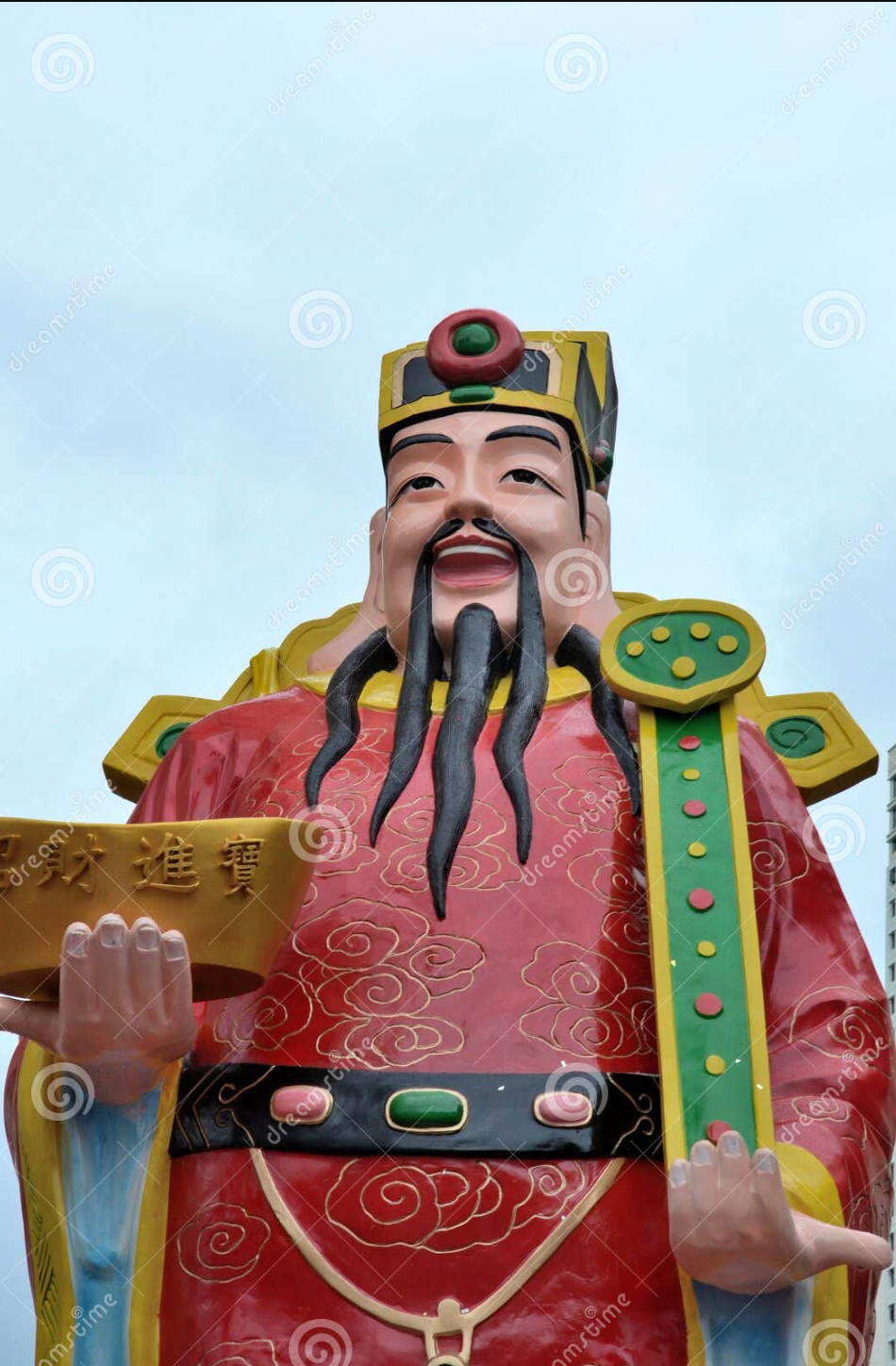
Cai Shen is known as the God of Wealth and is one of the most prominent figures linked to wealth and prosperity in Chinese culture. He is often depicted with gold ingots and symbols of abundance. Like Kuvera, Cai Shen is worshipped for his ability to bring financial success and good fortune.
Jinshi represents the wealth of the earth and is associated with riches and material abundance. He is sometimes depicted in connection with agriculture, symbolizing the wealth derived from bountiful harvests.
Although primarily known as a philosopher and founder of Taoism, Laozi (Lao Tzu) includes aspects of prosperity and abundance through harmony with nature. His teachings emphasize balance and the natural flow of wealth and resources.
Considered a protector of wealth in certain regional beliefs, Zhenguo embodies concepts of richness and the protection of treasures, similar to Kuvera’s role as a guardian of riches.
Japanese
In Japanese mythology, several gods and deities share similarities with Kuvera, particularly in their associations with wealth, prosperity, and abundance.
Bishamonten (Vaiśravaṇa) is often considered the Japanese equivalent of Kuvera. As one of the Seven Lucky Gods (Shichifukujin), he is the god of warriors and also a protector of wealth and prosperity. He is typically depicted wearing armor and carrying a spear, symbolizing his role as a guardian who brings both material and spiritual wealth. Like Kuvera, Bishamonten is associated with fortune and is venerated for blessings of prosperity.
Daikokuten (Daikokyo) is regarded as the god of wealth, commerce, and prosperity, and is also one of the Seven Lucky Gods. He is depicted with a large bag and is often flanked by rats, a symbol of abundance. His character emphasizes good fortune, success in business, and overall well-being, similar to Kuvera’s role in ensuring material prosperity.
Inari Ōkami is the deity of rice, agriculture, and fertility, often associated with wealth through the agricultural abundance that rice represents. Inari is worshipped by merchants and business owners for blessings in trade and prosperity. The connection between agriculture and wealth parallels Kuvera’s symbolism of bounty.
These deities reflect the themes of wealth and abundance highlighting the universal appreciation of prosperity across various cultures and mythologies.
Plutus
Demeter
Cai Shen
Kuvera
Bishamonten