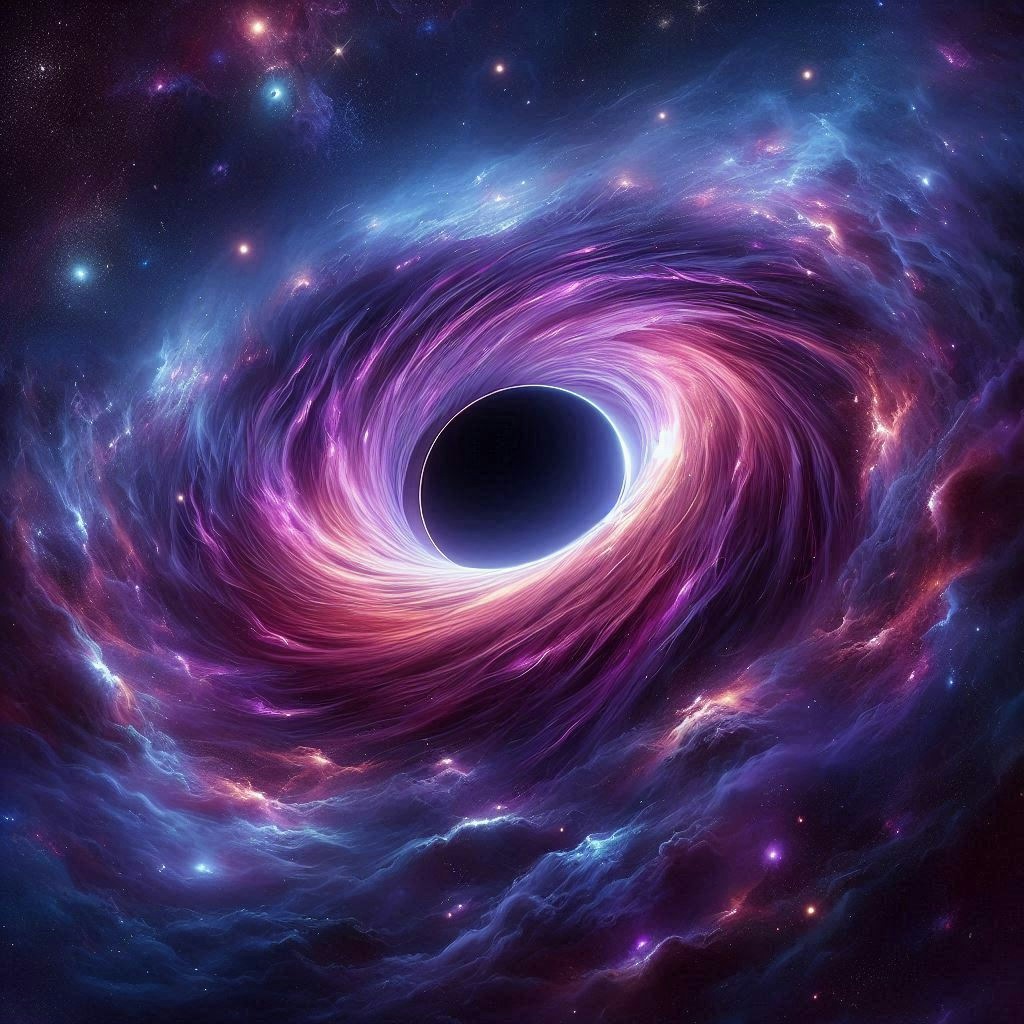
What is a black hole according to Vedic astronomy?
In Vedic astronomy, the concept similar to what we now understand as a black hole may not be explicitly stated, as ancient texts often focus on celestial bodies in terms of their spiritual and metaphysical significance rather than scientific description. However, certain texts describe phenomena related to darkness or regions of space where light is absorbed, which could be interpreted in modern terms as analogous to black holes. This aligns with the idea of cosmic cycles and the nature of the universe as seen in Vedic cosmology. The emphasis is typically on the influence of celestial bodies and their spiritual implications rather than a physical or scientific framework. expand on regions of space where light is absorbed
In the context of Vedic astronomy and cosmology, references to regions of space where light is absorbed can be interpreted in several ways:
- Cosmic Darkness: Ancient texts often describe the universe as consisting of various layers or realms, some of which may be associated with darkness or voids. These regions could symbolize areas devoid of light or energy, similar to the concept of a black hole that absorbs all surrounding light due to its intense gravitational pull.
- Spiritual Metaphors: Light in Vedic literature often symbolizes knowledge and enlightenment, while darkness represents ignorance and the material aspects of existence. Thus, regions of space that absorb light might metaphorically represent spiritual voids, ignorance, or areas in the soul where enlightenment has yet to penetrate.
- Astronomical Phenomena: While ancient Vedic texts may not describe black holes in a scientific sense, they do touch on celestial events such as eclipses or the movements of celestial bodies that could create the appearance of darkness. These events can be seen as cosmic phenomena where light is obscured or altered.
- Philosophy of Cosmology: Vedic cosmology often interprets the universe as cyclical, with periods of creation (light) and destruction (darkness). This cyclical view might align with the nature of black holes as regions that eventually contribute to the regeneration or transformation of cosmic matter.
- Symbolism of Absorption: In many philosophies and spiritual writings, the act of absorption can symbolize a return to the source or the ultimate dissolution of individuality into the cosmic whole. This resonates with concepts in both Vedic thought and modern physics, where black holes may represent not just physical phenomena but the ultimate fate of matter in the universe.
In summary, while Vedic astronomy may not directly describe black holes as understood in contemporary astrophysics, the concept of regions in space that absorb light can be explored through various spiritual, metaphorical, and philosophical lenses that resonate with the ancient understanding of the cosmos.